
You've Got a Logo. Now What? The Brand Rollout Checklist
The logo isn't the finish line. It's the starting gun.
You've briefed the designer, sat through the revisions, picked the font, signed off the colours, and finally received the files. And there it is - your new logo, sitting in a folder on your desktop, looking sharp and full of potential.
So you're done, right?
Not even close.
Here's what most small business owners get wrong: they treat the logo as the destination, when really it's just the beginning. A logo on its own doesn't build a brand. The magic is rolling it out consistently everywhere people meet you. That's where recognition happens. That's where trust is built. That's where your brand starts doing its job.
Why Consistent Rollout Actually Matters (This Isn't Just About Looking Nice)
This is a commercial question, not a design one.
When your logo shows up in twelve different sizes, your email signature uses the old version, and your invoices still have no branding at all, you're sending a message - just not the one you intended. Inconsistency signals disorganisation. It makes people unconsciously trust you a little less. And in competitive markets, that hesitation costs you.
On the flip side, brands that show up consistently, everywhere, become familiar. Familiar feels safe. Safe gets hired.
The research backs this up: consistent brand presentation across all platforms can increase revenue by up to 23%. More importantly, it makes your marketing work harder. Every touchpoint reinforces every other touchpoint. Your social media makes your proposal look familiar. Your business card makes your website feel recognisable. Everything compounds.
So let's talk about where your brand must show up - and how to tackle it without feeling overwhelmed.
The Recommended Order: Start Where You're Most Visible
Not all touchpoints are equal. Tackle the highest-visibility ones first, especially the ones a prospect is likely to encounter before they've decided whether to trust you.
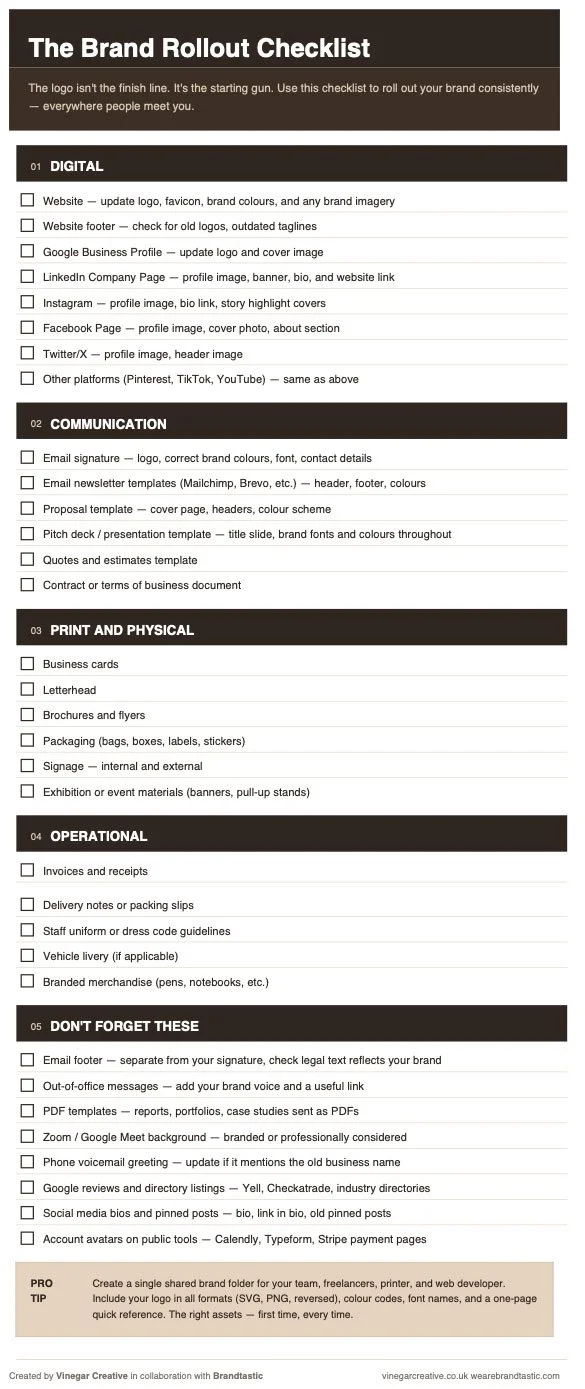
Priority 1 - Digital foundations (first 48 hours)Your website and social media profiles are live 24/7. They're often the first thing a prospective client sees after a referral or a Google search. Update these immediately.
Priority 2 - Communication touchpoints (first week)Every email you send is a brand impression. Your signature, your proposal templates, and any pitch decks you use in conversations - get these sorted before your next client interaction.
Priority 3 - Print and physical collateral (within the month)Business cards, brochures, packaging, signage. These take longer to produce, so brief your printer or designer promptly. Running out of business cards before your new ones arrive is painful but manageable. Handing out old-branded ones for six months is not.
Priority 4 - Environmental and operational touchpoints (ongoing)Uniforms, vehicle livery, office signage - these involve longer lead times and sometimes higher budgets. Plan them, bu


Don't Forget These: The Touchpoints Most People Miss
These are the ones that catch people out - often because they're invisible until a client or prospect notices them.
Email footer. Different from your signature. Many email platforms append a separate legal footer. Check what it says and whether it reflects your current brand.
Out-of-office messages. They're an opportunity for a brand impression. A generic "I'm away, back Tuesday" is a missed chance. Add your brand voice and a useful link.
PDF templates. Any document that goes out as a PDF - reports, portfolios, case studies - should be on-brand. Old PDFs lingering in the wild can undo a lot of good work.
Zoom or Google Meet background. More client meetings happen on video than in person now. A branded or professionally considered background does something subtle but real: it signals preparation.
Phone voicemail greeting. Most people set this up once and forget about it. If yours still mentions the old business name or sounds off-brand, change it today.
Google reviews and directory listings. Yell, Checkatrade, industry directories - these often have old logos, old bios, and outdated information. Work through them systematically.
Social media bios and pinned posts. It's easy to update the profile image and miss the bio, the link in bio, or that pinned post from three years ago.
Account avatars on tools you use publicly. Calendly booking pages, Typeform surveys, Stripe payment pages - anywhere a client might see your name should show your brand.

Pro Tip
Create a single brand folder and share it with everyone who could conceivably need your assets - your team, your freelancers, your printer, your web developer. Include the logo in all its formats (SVG, PNG, reversed version), your brand colour codes, your font names, and a one-page quick guide. When the next designer, developer, or supplier needs to use your brand, you're not starting a search through email threads. The right assets are there, first time.
This is the kind of detail that separates brands that grow from ones that drift.
Ready to Make Your Brand Unstoppable?
If you want the full playbook - not just the rollout checklist, but the thinking behind building a brand that actually works commercially - pick up a copy of Brandtastic. It covers everything from positioning to brand consistency to making your brand genuinely memorable. Buy the book at wearebrandtastic.com - and tell them Vinegar sent you.
And if you need hands-on support with the rollout itself, that's exactly what we do at Vinegar Creative. From updating your digital presence to redesigning your templates and print collateral, we can help you take a great logo and turn it into a brand that shows up everywhere it should. Get in touch and let's make it happen.
Vinegar Creative is a brand, design, and digital agency based in London, specialising in bold creative thinking for ambitious businesses. This post is written in collaboration with Brandtastic.